
:::::::::::::::::::::::::::::::::::::::::::::::::::::::::::::::::::::::::::::::::::::::::::::::::::::::::::::::
Gavin Bryars - Dolce voce - 37’ (2012):::::::::::::::::::::::::::::::::::::::::::::::::::::::::::::::::::::::::::::::::::::::::::::::::::::::::::::::
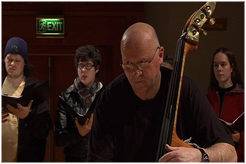 A film produced and directed by Jacqueline Caux
Image: Claude Garnier - Patrick Ghiringhelli
Sound: Eric Boisteau
Editing: Dora Soltani
Executive Producer: Stephane Jourdain
Conformation: Didier Coudray
Mixing: Jacques Guillot
Voice: Ryan Gregory
Coproduction: Centre Pompidou
Executive Producer - Audiovisual Service: Laurie Szulc
Production Manager: Murielle Dos Santos
Delegation to the audiovisual cultural action (DACA): Anne-Michèle Ulrich
With the support of "Arts 276" - Autumn Festival in Normandy - Rouen: André Benoît, Julien Bourguignon.
Musics Gavin Bryars:
Lauda 13 "Ramble on Cortona" - 2003 - Gavin Bryars piano - concert tribute to Daniel Caux - Centre Georges Pompidou - 2009
The Sinking of the Titanic - 1969 - 1994 version - Hymn IV (Aughton)
:::::::::::::::::::::::::::::::::::::::::::::::::::::::::::::::::::::::::::::::::::::::::::::::::::::::::::::::
:::::::::::::::::::::::::::::::::::::::::::::::::::::::::::::::::::::::::::::::::::::::::::::::::::::::::::::::
Screenings :- La Chaux-de-Fond (Switzerland) - ABC Cinema - as part of a retrospective "Jacqueline Caux – How to film the music?" - January 13, 2014
- Bernay Autumn Festival in Normandy - Abbey Church
:::::::::::::::::::::::::::::::::::::::::::::::::::::::::::::::::::::::::::::::::::::::::::::::::::::::::::::::
He says he loves, as a musician, Percy Grainger, a pianist and composer - who was born in Australia in 1882, who was a pupil of Busoni in Berlin, then Grieg in London and died in the United States -, and Lord Berners, who was a diplomat, painter, writer and self-taught musician who wrote small simple musics with a lot of humor.
And curiously, although he feels himself very English, he is interested, even passionate, about a number of French writers and artists such as Alfred Jarry, Raymond Roussel, Raymond Queneau and the group Oulipo (Ouvroir for Potential Literature) including, among others, Georges Perec and François Le Lyonnais. And among artists, besides Marcel Duchamp, Henri Rousseau, and Erik Satie, and also a musician of the nineteenth century, now forgotten, who composed works for piano in a romantic spirit: Charles Valentin Alkan.
At the beginning of the seventy, Gavin Bryars has composed a series of works more or less tinged with humor which he gave the name "Private Music". One of the most important pieces of this series is called "One, Two-One-Two-Three-Four." In this piece, the performers each have a tape and earphones connected to the tape. In each pass a cassette recording of the same music, and it is for them to try to reproduce on their instruments, what they hear in their headphones. But the tapes do not rotate at the same speed due mainly to the different battery status - some are quite worn - which has the effect of changing the time, and also the height of the tones. Also, if a number of performers perfectly know the song, the other not at all: they discover by listening and apply to reproduce with more or less difficulty. The result is a kind of music drifting in a state of collapse, which is reminiscent of the soft watches of Salvador Dali.
There is also at Gavin Bryars, a Sherlock Holmes side. He also is very familiar with the work of Conan Doyle, but he is more interested today in the French writers of the magazine "Enigmatica." He is interested in the idea of extracting a perfect crime novel in which there is no question of murder by showing that one character of the text was killed by another ...
It is also an approach that Gavin Bryars adopted to investigate how musicians could write music in the past. For example, some works by Schumann containing cryptograms and strange music systems. It is also a system that he applied to his research about the Sinking of the Titanic, before starting to compose the music for his piece dedicated to the great ship.
In Jesus Blood Never Failed me Yet he wants to magnify the voice of a tramp he had recorded near his home. With his Lauda he somehow wrote a music for madrigals " like a jacket that you return", to give us the oportunity to listen - and even rediscover – otherwise these musics.
:::::::::::::::::::::::::::::::::::::::::::::::::::::::::::::::::::::::::::::::::::::::::::::::::::::::::::::::
:::::::::::::::::::::::::::::::::::::::::::::::::::::::::::::::::::::::::::::::::::::::::::::::::::::::::::::::